Gail Smallman
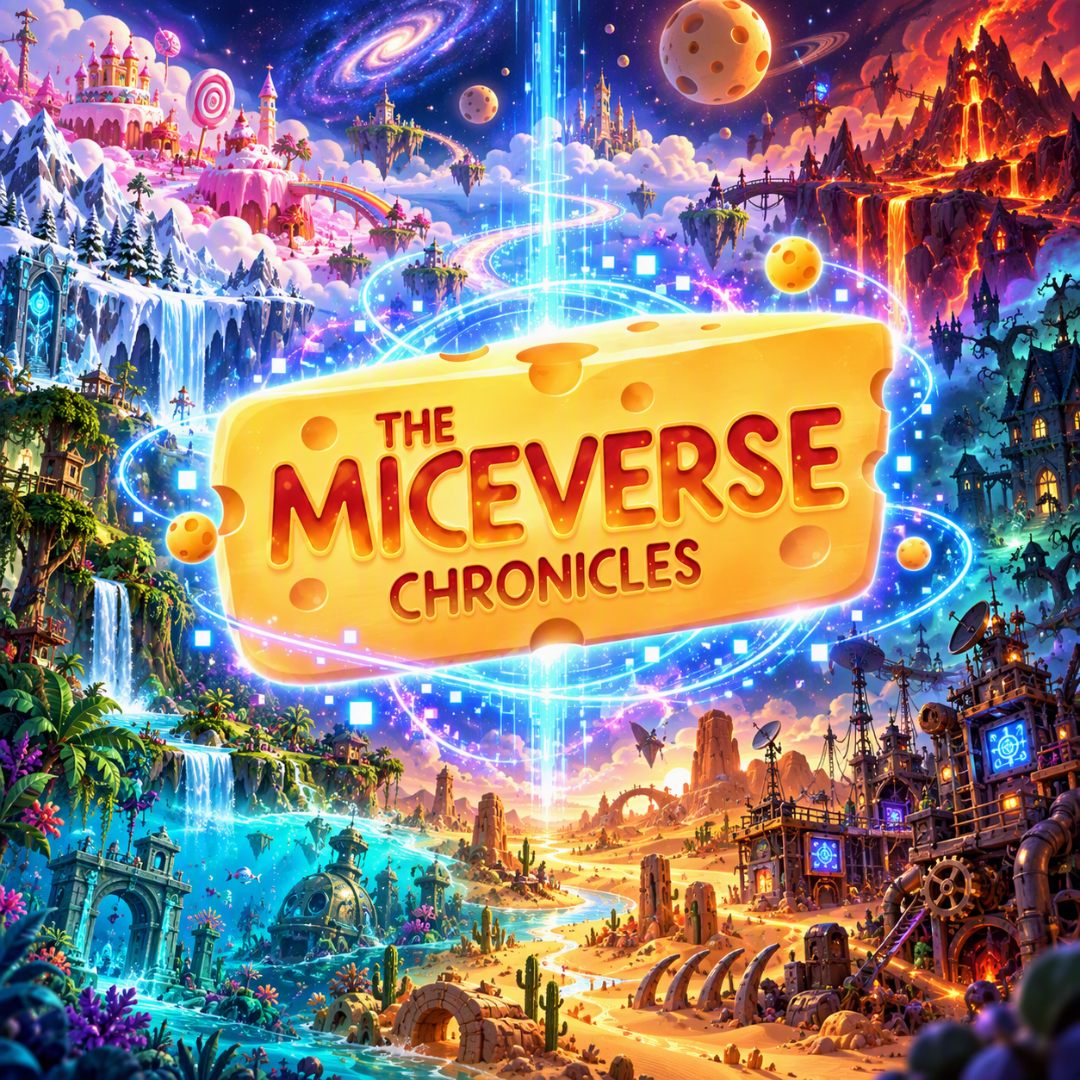
Creator of The Miceverse Chronicles and mastermind behind Smallman Publishing.
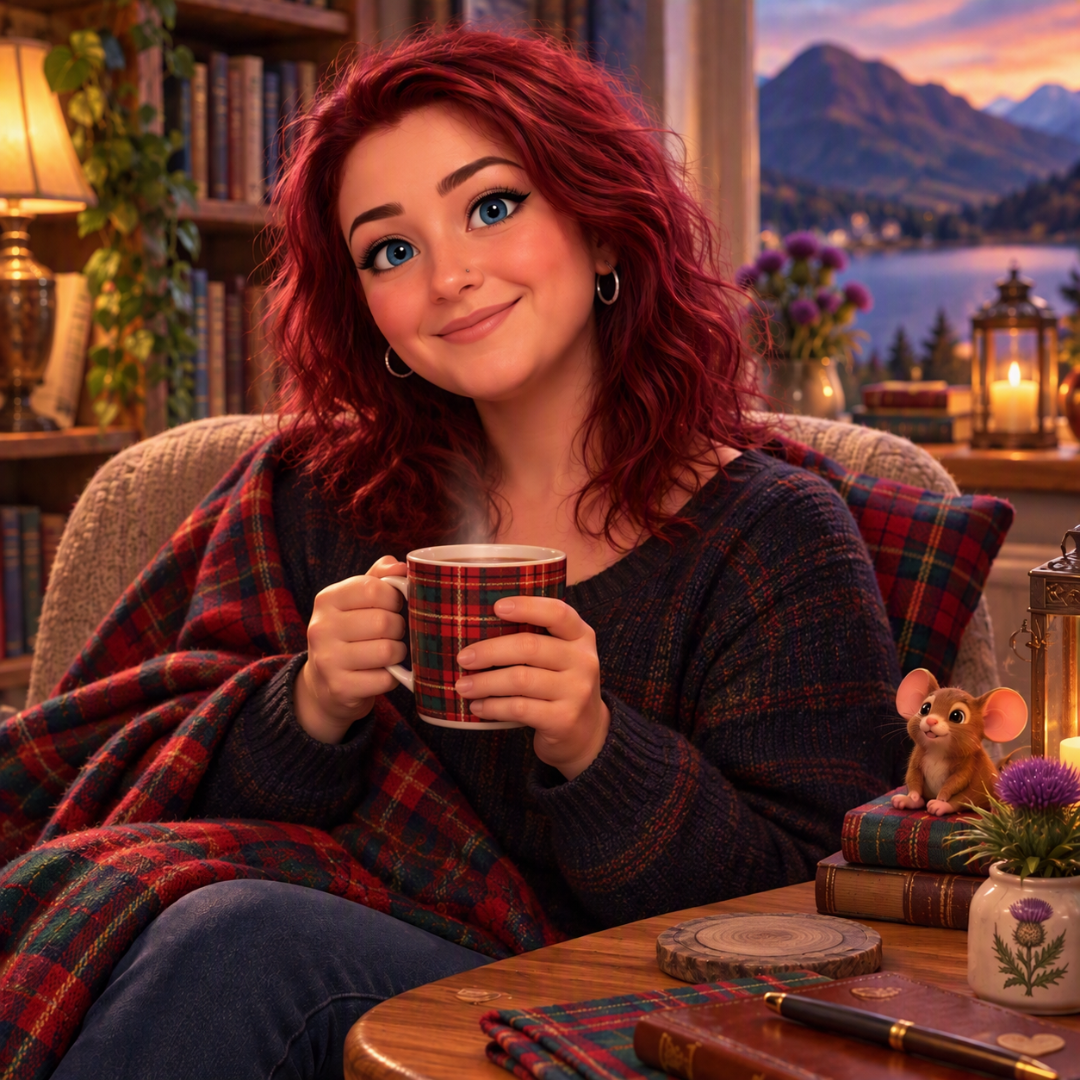
From the first spark of an idea to the realities of publishing, Gail shares the thoughts, experiences and creative detours behind her work. Open any question to read her answer.
The Person Behind the Saga
Q1If someone asked you to describe yourself as an author in three words, what would they be, and why?
Hobbyist. Extra. Fantastical.
I consider myself a hobbyist because writing is just one part of a much bigger creative passion. Extra, because for me it's never just about writing a story. There's a whole world of additional creativity that comes with it. And fantastical because I love fantasy worlds, imagination and all things a little outside the ordinary. Besides, fantastical is absolutely a word!
Q2Have you always been someone with an active imagination, or did you discover your creative side later in life?
I've definitely had an overactive imagination for as long as I can remember. I genuinely don't know what life is like without it!
It's both a blessing and a bit of a curse. On the positive side, it allows you to create incredible worlds, characters and adventures. It helps you dream, visualise possibilities and think beyond what's immediately in front of you. Even something as simple as decorating or styling a room benefits from having a good imagination.
On the other hand, that same imagination can be rather unhelpful when it comes to dreaming up every possible worst-case scenario!
When I was a child, I used to think it would be really cool to be an author one day. I don't necessarily have that same ambition now, but I'm really glad I eventually did it. It took me a surprisingly long time to realise that something doesn't have to become your profession for you to make it happen. You can simply do it because you want to.
My ADHD may or may not have had something to do with how long that realisation took!
Q3What made you decide to actually write a book rather than simply keep all those ideas in your head?
A few years ago, I created a 40 by 40 list. I gave myself around five years to complete 40 things I wanted to do before turning 40. Because without a plan and something to actively work towards, a list can quite easily remain just a list of wishes.
In reality, my list ended up containing well over 100 things! It included skills I wanted to learn, classes and creative activities I wanted to try (wouldn't it be nice to say you're wearing a piece of silver jewellery you've made yourself?), unusual experiences (becoming a beekeeper for a day is still on the list!), and places I wanted to visit and explore. Hello, Taj Mahal!
Writing a children's book was one of those ambitions. I wanted it to include illustrations, too. I'm quite arty, but I'm not an illustrator, and finding the right person to bring your vision to life can be time-consuming, difficult and expensive. For context, Escape the Rift ended up containing over 100 illustrations!
Thankfully, advances in AI meant I could bring my vision to life within budget. I'm genuinely happy with the finished product, particularly because I was able to create all the individual pieces myself to a standard I was pleased with.
But the actual inspiration for the story came from a slightly different direction.
Eli was taking an interest in creative writing at school, so his dad and I were showing him a few tips and tricks. Things like using OneNote and hyperlinks to organise world-building notes, develop characters and keep track of ideas. It put me in the mood to have a go myself.
At the time, Eli and Cain were really into mice. They spent most evenings in VR creating their own mouse characters and building worlds and lands for them to inhabit. They designed scenery, obstacle courses and games to play together.
Eli called Cain "Cain Mouse" and Cain called Eli "Eli Mouse". They literally squeaked at each other constantly through their VR headsets. They were their own little Squeak Squad!
Naturally, I thought these mice would make a great starting point for Eli to write about. They were already established characters with their own little world. Somehow, though, the arrangement evolved into Eli telling me things about the characters and their adventures while I did the actual writing!
I thought it would be something his class teacher might enjoy reading, and we eventually presented it as an end-of-year gift.
What started as a little short story somehow became a 381-page book, over 100 illustrations, printed copies available through Amazon and premium hardback editions available separately on request!
So much for just ticking something off a bucket list!
Q4Are you someone who plans a story meticulously, or do you tend to start with an idea and see where the characters take you?
I'm actually a bit of both. If there's an element I know I can plan meticulously and it's within my grasp to do so, then I absolutely will.
This whole writing journey has involved a lot of things I simply had no idea about. One thing led to another, and before I knew it, I'd disappeared down countless rabbit holes.
There were things I knew I didn't know, which I figured I'd learn as I needed them. But there's also an awful lot I didn't even know I didn't know, and I'm still discovering more of those things!
I could quite easily have written a badly formatted Word document, emailed it to the teacher and technically ticked off my 40 by 40 goal. But if I'm going to do something, I always endeavour to do it well.
As for the storyline itself, that was entirely new territory. I must have gone from front cover to back cover at least four times, making substantial changes, filling plot gaps and adding layers of detail along the way.
The actual story, though? I just started writing.
Perhaps a little strangely, although the finished story is ultimately about the Miceverse, my main objective was to capture Eli. How his brain works, how he sees the world, how he comes across, his imagination and creativity, his friendship with Cain, and that wonderfully busy determination they both have to pursue their interests.
The adventure itself came second to that.
I had to make the story up as I went along, and thankfully it evolved into something that I think (and hope!) turned out rather well.
Q5What do you think people might find surprising about you as a writer?
Maybe that I am one?
It's actually quite strange to describe myself as an author. It almost feels like an identity stamp. "Hi, I'm Gail, I'm a writer/author." I don't really feel like that, despite technically having a published book, an accompanying colouring book, songs, social media accounts, an email account, a YouTube channel and a website, all connected to my creative work.
I suppose I see myself primarily as a mum, a wife, someone who works and a bit of a homebody. I see myself as creative, certainly, but writing a book is just one flavour of that creativity. Another notch in my belt, or a feather in my cap.
I think my friends, family and colleagues are probably both surprised and unsurprised that I've written a book. They can see it's something I'm capable of doing, but equally, it seems to have come out of nowhere. That's quite typical of me, really. Random achievements occasionally just appear. It's a bit of a "Look at this cool but totally random thing I've done!" situation.
As for unusual writing habits, I honestly don't know what the average writer does. I've largely made it up as I've gone along, learning and figuring things out along the way.
What I do know is that I've gained so much knowledge and developed so many new skills through this experience that it feels a shame to let them go to waste now.
That's probably why there's potential for a second book, even if nobody buys it! It's also why I'm encouraging David to explore his own writing, and why I want to nurture Eli's enthusiasm for creative writing. He's got the interest and the ideas, so why not help him harness that enthusiasm, get his thoughts onto paper and put some of his brilliant ideas out into the world for others to enjoy?
Perhaps the biggest surprise isn't that I've written a book, but that one creative project has opened the door to so many more possibilities.
The Creative Mind
Q6Where do your story ideas usually come from? Everyday observations, random thoughts, dreams, conversations or something else entirely?
In this particular case, the curiosity was definitely sparked by something real. Eli is an inspiration for many things in my life anyway, but the opportunity presented itself as something tangible, with a natural deadline: an end-of-year gift for his class teachers.
From there, I tend to get carried away. One idea snowballs into something bigger, which is probably just ADHD for you! I don't necessarily get to choose what captures my interest or what I'll become hyperfocused on. I just have to make the most of the enthusiasm while it has me in its grip.
What I don't want, though, is to feel that I have to do something. That can suck a lot of the joy out of the creative process, and enjoyment is a big part of why I do it in the first place.
I also have quite a long memory and good pattern recognition, which I think influence how I approach ideas.
I've come to realise that very few of us have genuinely original thoughts. Most people think along similar lines, or have experienced many of the same things and been exposed to similar influences. We draw on those experiences in whatever we create. The longer we're on the planet, the more experiences, observations and influences we accumulate, giving us an ever-growing collection of things to draw from.
I think creativity is often less about having a completely original idea and more about what you do with all those things you've collected along the way.
Q7Do you ever find yourself developing an idea that becomes considerably bigger or stranger than you originally intended?
Need I answer? Hahaha!
I don't set out with some grand idea of creating an all-singing, all-dancing production. I generally just want to get something right. Then, somewhere along the way, I start noticing that something feels missing, or that it could be even better if I added X, Y or Z.
And before I know it, one thing has snowballed into something considerably bigger.
That's exactly what's happened with this project. I didn't set out to create all the additional things that now surround the book. It's grown into a whole collection of different creative avenues to explore, all offering different ways to share the Miceverse and the little Squeak Squad that inspired it with the wider world, should anyone happen to stumble across it!
I think my biggest challenge is that if I'm going to release something, I want to release it in a fully polished condition. That's not always straightforward. If everything is carefully planned from the beginning, perhaps it's achievable, but when a project evolves organically, there are suddenly lots of different things to consider.
I suppose I have a habit of turning a relatively simple idea into a bit of a beast!
Q8You created the book with a particular child in mind. How did that influence your writing style and the way you approached storytelling?
One thing I was quite conscious of when writing Escape the Rift was that I wanted it to be in a format Eli would actually appreciate and enjoy reading.
He'd previously made comments about things he'd found frustrating in other authors' books, and I paid attention to those.
For example, he'd noticed that when several characters were talking in a scene, some authors wouldn't identify who was speaking until after the dialogue. By that point, he'd already read the sentence in the wrong character's voice in his head. Sometimes the dialogue would even flow straight into another character's speech without making it immediately obvious who was talking.
I deliberately chose a writing style that avoided that confusion. It might mean using "Cain said" or "Eli said" quite frequently, but that was intentional. I wanted the dialogue to be easy to follow rather than leave him having to mentally backtrack.
He'd also mentioned struggling when authors placed characters in locations that weren't described particularly well, or used unfamiliar nouns and terminology without enough context. He couldn't always visualise where the characters were or what they were looking at.
So I made a conscious effort to create a visually rich world, with enough descriptive detail for the reader to picture the surroundings and feel immersed in the environment.
I may have gone a little overboard with the descriptions at times, but I don't think anyone can accuse me of leaving them wondering what the places in my imagination looked like!
Ultimately, I wasn't just trying to write a story I thought children would enjoy. I was trying to write one that would work for the particular child who inspired it.
Q9Which part of writing do you enjoy most: inventing the world, developing characters, writing the actual story or seeing the finished book come together?
I enjoyed the world-building and character development most.
I love thinking about all the little details that make a world feel real. What do the characters look like? Where do they live? What do they do (can you say virtual mice work?) What are their skills? Their weaknesses? And, of course, their favourite cheeses!
I actually had to research all the different types of cheese available. I couldn't have them all just liking a bit of cheddar!
Then there's the geography: the different biomes, lands, islands and worlds, how close they are to one another, and how they interrelate, if at all. Add in the characters' backstories and there's an awful lot to explore.
The lovely thing about world-building is that the possibilities are practically endless. You can keep developing things, introducing new ideas and discovering where different elements might lead.
Which is also why, for me, the difficult part is choosing a linear path through all of that to create the particular adventure that belongs in one book.
When you're creating a chronicle, as I am, you also have to think beyond the immediate story. Certain decisions you make about the world or a character's outcome now could close off possibilities for later books. If you're not careful, you can end up having to backpedal, and sometimes the decisions are so deeply embedded that doing so becomes incredibly difficult, if not impossible.
So, while I love having endless possibilities, I also have to be careful not to write myself into a corner
Q10Do you ever get emotionally attached to your characters? Have you ever struggled to put one through something horrible because you quite like them?
I consider myself a bit of an empath. I often put myself in other people's shoes and try to imagine how I would feel if I were experiencing what they were going through. I think it helps you relate to people, understand where they're coming from and perhaps make sense of why they're behaving in a particular way.
It also helps when playing devil's advocate. Some people might say that's just sitting on the fence, but I genuinely don't think everything is black and white. Multiple statements or perspectives can be true at the same time, and I can usually see things from several different sides.
It doesn't necessarily make decision-making any easier, mind you! But it does help when trying to balance the feelings and circumstances involved.
That's how I approach real people in my life, anyway. But fictional characters? Well, apparently I'm not much better!
My books are aimed at middle-grade readers, so you generally don't want to put characters through anything too horrific or distressing. It can be confusing or upsetting for younger readers. But I suspect I'd still have difficulty putting my little mice through the wringer.
If I were going to have one glitch out, explode, implode or disappear forever, I'd probably have to position it in such a way that neither I nor the reader had become particularly attached to that character. In other words, don't give us too much opportunity to get to know them first!
Is that odd? I'd feel guilty. Over an imaginary digital-world mouse.
Q11If you could borrow another author's imagination for a day, whose would you choose?
I don't think I would. My brain has quite enough going on inside it, thank you very much!
I don't really have idols or particular favourite actors, singers or authors. I tend to like a bit of this and a bit of that. Everyone has their own good qualities, and what appeals to me can depend entirely on my mood at the time. Sometimes certain things just have to fit the mood I'm in.
If I could borrow anything, I think the most useful thing would be someone's accumulated knowledge: all those little nuggets of information and experience that could make my own efforts easier or more impactful.
Whether that's writing, publishing, marketing, songwriting, music styles, cover design or any of the other things I've ended up exploring along the way.
It's a hobby. I'm not expecting to become the next J.K. Rowling or Roald Dahl. This is just for funsies! But it's been a painstakingly slow process learning all the different elements as I go along. I'm getting there, slowly but surely.
Actually, perhaps it's not even another author's imagination or knowledge I'd most like to borrow. I think I'd really enjoy simply sitting down and chatting with someone who's been through the same sort of organic process I have. Someone I could share the trials and tribulations with, all the hurdles and unexpected challenges involved in getting from an initial idea to where I am now.
Because, whilst it's been incredibly fulfilling, it's also been quite a lonely process at times. I've had to figure out and learn so much of it myself, without really having someone alongside me who understands what that journey looks like.
Gets the tiny violin out. 🎻
Sometimes it's just nice to have someone who gets it. Sharing is caring, after all!
Inside the Miceverse
Q12Where did the original idea for the Miceverse Chronicles come from?
Once I started thinking of everything as part of one big, connected ecosystem, the possibilities became practically limitless. Rather than having separate little worlds that existed independently, I could start considering how they fitted together, how they connected and what might exist beyond the boundaries of the first adventure.
If you read Escape the Rift, or even Eli's author bio, or have a look at his Creeped Out series page, you'll quickly get an idea of just how many ideas that boy has.
The reality is that if his interest in mice continued, there would be far more character possibilities than I had pages to shake a stick at!
My keyboard would eventually wear down to the point where I couldn't even read the lettering anymore! Slight exaggeration, perhaps, but you get the idea. The boy has an almost unlimited supply of ideas.
And really, the Miceverse grew out of trying to find somewhere for all those ideas to belong.
Q13Why mice? What makes them the perfect inhabitants for your fictional universe?
Eli and Cain's obsession with mice was the original inspiration, and they're also the main characters in the book. It just felt like a natural choice.
A lot of the characters and ideas had already been invented, so why waste something that was already a good thing? We had an entire collection of mice and the beginnings of their own little world, ready and waiting to be explored.
The squeaking and chatter of mice had become a daily feature in our home, too!
In the book, there's a mention of them each having a little wooden mouse. Cain's is darker in colour because he has brown hair, while Eli's is lighter because he's blonde. That's actually based on real life, too.
I suppose the real question should be directed at Eli and Cain. Why mice?
Honestly, I don't think anyone knows. We just accept that it is!
Q14The Miceverse combines virtual reality, adventure, strange environments and imaginative creatures. What do you hope readers experience when they enter that world?
Yes! All of those things, really.
I think readers might get a bit of whiplash as they traverse between the different worlds, to be honest! Each one has its own distinct biome and identity. They're not just different places with different names; they're environments that I want readers to be able to visualise clearly and immerse themselves in.
There's so much variety between the lands, and I hope that each feels like somewhere you could genuinely imagine visiting.
The experience also changes as the story progresses. Each chapter, and each new direction the boys take in their mission, brings with it different feelings and experiences. One moment you're discovering somewhere completely new, and the next you're being pulled into a very different part of the adventure.
I suppose I want readers to enjoy the excitement and escapism of exploring an imaginative world, but also to become curious about it. To wonder what's around the next corner, what else might exist and what they'll discover along the way.
And if it inspires someone to go away and start creating their own characters, worlds or adventures, then that's an added bonus!
Q15The title Escape the Rift seems to refer to more than just the physical rift threatening the Miceverse. Does the title have a deeper meaning?
I think it does, and it's one of the things I particularly like about the title.
On the surface, it's quite straightforward. There's a rift threatening the Miceverse, and the boys need to find a way to escape it and get home.
But the more you look at the story as a whole, the more the word rift takes on additional meanings.
A rift doesn't necessarily have to be a physical tear in something. It can represent a separation, a conflict, a misunderstanding or a divide between two things that perhaps need to be brought together.
There are several different forms of separation and conflict running through the story, and I think the title captures that quite nicely without necessarily giving anything away.
I also like that it works on two levels. You can read the book, enjoy the adventure and understand the title perfectly well. But once you've finished it, you might find yourself looking at the title a little differently.
I think a good title should work for the story you're reading, but it's even better when it takes on a little more meaning after you've turned the final page.
Q16Although Escape the Rift is an adventure story aimed at middle-grade readers, there are some surprisingly thoughtful themes running underneath the action. Do you deliberately weave deeper meanings into your stories, or do some of them emerge naturally as you write?
I think it's a bit of both, although I wouldn't necessarily say I sat down with a list of philosophical themes I wanted to squeeze into a children's adventure!
I started with a story, characters and a world that I wanted to bring to life. As the story developed, so did the characters, their circumstances and the relationships between them.
I think when you start considering the different personalities, backgrounds and experiences of your characters, it's quite natural for deeper themes to emerge.
There's a lot more happening in Escape the Rift than simply trying to get home. There are ideas around friendship, responsibility, identity, understanding and how we perceive others.
I quite like the idea that a younger reader can enjoy the adventure without necessarily thinking too deeply about any of that, while an older reader might recognise some of the additional layers.
I don't think every reader needs to take away exactly the same thing. Sometimes it's enough to enjoy the story, but if something makes you stop and think along the way, then that's a bonus.
Q17Many fictional characters begin with quite simple identities or roles. How important is it to you that your characters become more than the labels they're initially given?
I think it's important to remember that a character is more than their name, appearance or the role they've been given.
When you're creating characters, it's quite easy to start with a basic concept. You might have a character who's a builder, a ghost, a villain or something else entirely. That's a useful starting point, but it doesn't necessarily tell you who they are as an individual.
I enjoy exploring what sits behind those initial impressions. What makes them tick? What experiences have shaped them? Are they happy with the way others perceive them? Is there more to them than people initially realise?
I think it's also quite important to allow characters to develop rather than simply remain the same throughout a story.
After all, people are complicated. We don't always fit neatly into the boxes other people put us in, and I don't see why fictional characters should have to either!
Q18Do you enjoy playing with readers' assumptions and allowing them to see events differently as they learn more about the world and its inhabitants?
I think it's a really interesting way of telling a story.
You naturally make assumptions about people and situations based on the information you have available at the time. That's how we navigate the world around us, and it's no different when you're reading a book.
You form an impression of a character, interpret their actions and build up an understanding of what's happening.
But what if some of those assumptions aren't quite right?
I like the idea that additional information can change how you interpret something you've already read. Rather than simply introducing a completely unexpected piece of information, you can give the reader a reason to reconsider what they thought they already understood.
It also makes a book worth revisiting. You might notice little things on a second read that you interpreted differently the first time around.
I won't say too much because I don't want to spoil anything, but I do enjoy the idea that sometimes the most interesting question isn't necessarily what's happening, but whether you've understood why it's happening.
Q19Do you like the idea that a younger reader might enjoy the adventure on one level, while an older reader might recognise additional themes and meanings?
Absolutely.
I think middle-grade books have a lovely opportunity to appeal to different ages without having to change the actual story.
A younger reader might be completely absorbed in the adventure, the strange environments, the creatures and the characters' antics. They're enjoying the journey and finding out what happens next.
An older reader might recognise some of the more complex ideas sitting underneath that same adventure.
I don't think you need to spell everything out for a reader, either. Sometimes it's much more satisfying to allow people to make their own connections and interpretations.
I also think it's quite nice when a book can be revisited at a different age and offer something slightly different because the reader has more life experience or a different perspective.
Ultimately, I wanted to create an enjoyable adventure first and foremost. If there's something extra for readers to discover along the way, then all the better!
Q20Is there a particular location, character or creature in Escape the Rift that you're especially fond of?
This is such a good question, but a really difficult one!
There are some characters I love because of the very things that might make them less appealing to someone else, such as their faults and imperfections. Others I love because they were simply so much fun to create and get to know.
Take Devil Mouse, for example. He's quite a theatrical villain. You don't want to like him, but secretly (or perhaps not so secretly) you do. He just has a way about him that draws you in.
I also went particularly whacky with the NPCs in terms of their appearances and personalities. I wanted them to be more than just surface-level characters. They needed memorable identities and traits so that readers wouldn't simply encounter them and forget them five pages later.
But who's my favourite? I genuinely struggle to choose.
I see quite a lot of myself reflected across three of the female mouses. (And yes, mouses is a word now. Eli says so!)
Tink is very capable and intelligent, but she can get inside her own head, doubt herself and be quite self-deprecating. She's hard on herself, but she's also good at cobbling things together and somehow managing to turn them into something pretty or practical.
Botanica enjoys her own company. She likes doing what she likes, has her routines, and can't always be bothered with the complications of dealing with other people. She's more interested in refining her own practices and finding the most effective way of achieving the results she wants.
And then there's Pink Mouse.
She's big and bubbly, loves cracking a joke and often uses humour to cover up her insecurities. She appreciates pretty things, darts about at approximately 100mph and leaves a trail behind her wherever she goes. Hers happens to be sparkle dust. Mine is unfinished tasks. But the similarities are there!
Honestly, though, I love all the characters.
I deliberately chose a broad range of personalities, traits and qualities to create a good balance throughout the chapters. They're quite a contrast to one another, almost like being inside a pinball machine, pinging from one character to the next.
That was intentional. I wanted them all to stand out in their own unique ways, rather than have a cast of characters who all felt a little bit the same.
Q21How much of yourself, your family or real-life experiences finds its way into your fictional worlds?
Quite a lot, actually!
Considering I used my own child, his best friends and things they had genuinely created, there's quite a bit of real life woven into the Miceverse. I even included myself, my husband David, and references to our cat and dog.
It's probably fair to say that the Miceverse has quite a few familiar faces hiding amongst its inhabitants!
There are, however, some things I deliberately changed.
For privacy reasons, I changed the place where we live and created a fictional Cumbrian town called Brackenvale. I also changed the names of the class teachers.
In some of the pre-release versions, I had actually used the real place name and people's real names. But I decided that I didn't want readers to be able to connect the fictional world to our real lives quite so easily.
The people who inspired the story deserve to have some privacy, too. I owe them that much.
It's also partly why we use cartoon avatars on our author profiles and across the social media pages for our book series. We can share our creative work and the personalities behind it without putting our actual identities front and centre.
So, while there's a lot of us in the Miceverse, not everything needs to be traceable back to our front door! (Quite literally)
Q22Do you already know how the wider Miceverse story will end, or is that still something you're discovering?
Em... I don't know if there is an end!
By rights, it's an infinitely expandable universe. Or... Miceverse!
There are so many possibilities. In some ways, perhaps too many. That's actually the difficult part!
I don't have an endgame, or even a particularly detailed long-term plan for the books. I'd love more opportunities to explore characters and lands we haven't discovered yet, but I also need to think carefully about how I do that. I want to make sure readers remain suitably gripped rather than simply throwing endless new ideas at them.
I've even included a Gmail address at the end of the book so readers can contribute ideas of their own. It's also available on the Smallman Publishing website for anyone who wants to get in touch.
I think at least one or two more main novels would be an ideal minimum. If there are more, brilliant! But I also have another idea that I'm particularly fond of.
I'd love to have a go at creating a Make Your Own Mouse Adventure series.
The idea would be that Eli and Cain invite you to join them in the game, and you get to choose your own adventure within the Miceverse.
For example:
You hear a rustling in the bushes. Do you:
A: Go and investigate where the noise is coming from? (Go to page 36)
B: Run away, because absolutely not! (Go to page 77)
I love the idea of readers being able to make their own choices and experience different adventures depending on which paths they take.
In some ways, it also removes one of the challenges I have with the main novels: the need to work towards a defined ending. It would give me the opportunity to dabble in different characters, locations and storylines in a more digestible way.
The individual adventures could exist independently of the bigger overarching story, and they wouldn't necessarily need to be full-length novels. Shorter stories would be absolutely fine.
So, I suppose I don't really have a fixed destination in mind. I have a universe full of possibilities, and I'm still figuring out the best ways to explore it!
The Realities of Being an Author
Q23What's been the biggest challenge you've faced in getting your book from an idea to a published product?
I think the biggest challenge has been just how much there is to learn outside of actually writing the book.
I'd naively assumed that writing a book would be the main part of the process. How wrong I was!
I've learned an extraordinary amount about paper, printing and even the strange physics of chonky books. There is a whole world of decisions behind producing a physical book that I'd never given a second thought to before.
Coated or uncoated paper? Silk or gloss? What paper weight? What happens when paper absorbs moisture and starts curling? Why do softbacks flop while hardbacks stand their ground? How do you make sure a chunky book has the right dimensions and binding to behave itself?
Then there's the question of colour reproduction, cover finishes, foil, spot varnish, spine widths, bleed margins, font sizes and page layouts. Apparently, even increasing the page size alongside the font size can make a significant difference to readability.
And that's before you get anywhere near the actual publishing side of things!
ISBNs, copyright, publisher imprints, metadata, writing a compelling blurb, legal deposit, print vendors, social media marketing... the list goes on.
I found myself learning about things I hadn't even realised I needed to know. It was a steep learning curve, and at times quite overwhelming, but also strangely joyful.
I genuinely enjoyed discovering all these different elements and figuring out how to make the finished product as good as I could.
There were also some wonderful people involved along the way, including beta readers, testers and those late-night problem-solvers who helped me iron out the wrinkles.
One of the biggest changes was that I eventually decided to share the Miceverse more widely than I'd originally intended. Initially, the book was created with a much smaller audience in mind, but I started thinking that if I didn't put it out into the world, there might be people who would never get the chance to discover it.
It won't be for everyone, of course. But it might be for someone.
And if I don't share it, those someones won't get to experience the airiness of the Nimbus Isles, the heat of Scorchtop, the eerie hush of Glooms Hallow or the ridiculous, chaotic joy of everything in between.
And honestly, I can't be held responsible for depriving the world of that!
So, I suppose the biggest challenge has been realising that creating a book is only one part of creating a published book. There's an enormous amount of work behind the scenes, but it's been an incredibly rewarding experience.
Here's to chonky books, steep learning curves and the courage to share something you've created, even when that wasn't part of the original plan!
Q24How difficult was it to find people willing to read and give feedback on your book before publication?
Honestly, getting people to test the book was one of the more difficult parts of the process.
Lots of people are willing in principle. They'll say they'd love to read it or help out, but the reality is that reading an unpublished manuscript isn't quite the same as picking up a finished book for pleasure.
When you're still in the throws of creating something, it isn't necessarily presented in a particularly reader-friendly format. It's a working document, there may be changes still happening, and it's not always the most polished experience.
Then there's the length. Escape the Rift isn't a little short story you can read over a cup of tea. It's a substantial book, and it takes time to get through. Even when someone genuinely intends to help, life gets in the way, and feedback can take a long time to come back.
Actually submitting useful feedback is another challenge in itself. Reading something and enjoying it is one thing; identifying inconsistencies, spotting areas that need improvement and explaining what isn't working quite so well is another.
Realistically, the main person who read it repeatedly during the editing process was my husband, David. He went through the same chapters so many times that I think he eventually became word blind!
Eli was the first person to read it from cover to cover.
He enjoyed it, which was lovely to hear, but his feedback was also quite interesting. He noticed the effort I'd put into making it clear who was speaking during conversations and describing the scenery so that he could picture the environments. That was a big tick for me, because those were things I'd deliberately worked on with him in mind.
Of course, he was only ten at the time, so there was a limit to how much editorial feedback he could realistically offer. The more detailed reviewing and editing was largely down to David.
I think one of the hardest things is that you can end up waiting for people who have said they'll read it, but never quite get around to doing so. If you're relying on that feedback before you can move forward, it can become a real stumbling block.
It's a difficult balance. You don't want to rush people, but you also can't put your entire project on hold indefinitely waiting for someone to find the time.
I've learned that there's quite a difference between people being enthusiastic about the idea of helping and having the time, inclination and ability to actually see it through!
Q25Do you find writing easier than editing, or is editing where the real hard work begins?
Editing was the bane of my life!
Do you know what mirror margins are? Neither did I!
Then there's the fact that images can't be positioned too close to crop zones, they need to meet certain DPI requirements for printing, and you have to consider whether those same images will actually look any good when reproduced in black and white.
You need to set up styles and your table of contents properly. Formatting for a printed book is quite different from formatting an ebook. You can't just use any font you fancy, either.
Writing was the easy part. It's within your gift. You sit down, put your thoughts into words and create your story.
But unless your manuscript meets a whole host of technical requirements, the printer can simply reject your file because it isn't compliant. And just to make things even more interesting, different publishing platforms and print providers have their own standards and specifications.
It's laborious going through everything, checking it, correcting it and making sure it's all right. And then, just when you think you've cracked it, you discover something else!
Of course, you can pay people to handle all of this for you. I chose not to go down that route because I wanted to figure it all out myself, and let's be honest, the costs can add up very quickly.
If writing and publishing were my full-time job, and I had an established readership and a successful author business, I'd probably look at outsourcing some of those tasks. That's what professional services are there for, after all.
But when you're starting out, and you're doing this as an independent author alongside everything else in life, sometimes it's simply a case of sucking it up and getting on with it.
So yes, writing was the enjoyable bit. Editing and formatting? That's where the real graft began!
Q26What's your proudest moment so far as an independent author?
There have been so many little milestones along the way that it's actually quite difficult to pick just one.
First draft completed. A book series and title name I was happy with. Printing pre-release copies and gifting them to people. Buying and registering ISBNs. Creating illustrated characters that brought the story and its inhabitants to life. Even getting character-themed bookmarks printed!
Then there was Eli reading the book from cover to cover and enjoying his own copy. That was a pretty big milestone in itself.
I set up a publishing imprint, registered with Amazon KDP, finalised a manuscript I was happy with and eventually created a cover I was finally satisfied with.
The book listing went live, first for pre-release and then for regular ordering.
Alongside that, I started creating and releasing songs inspired by the Miceverse, turned all my illustrations into line art and created a themed colouring book, which I also published on Amazon.
I built a website for Smallman Publishing, then had to learn how to make it discoverable through search engines. We created our own author profiles, too.
And now I've had friends and family pre-order some copies of the premium colour hardback edition. They've actually paid for them, which is lovely!
I'm not making any money from this. It's not really about that. It's just genuinely nice to know that people want to support something I've created and that I'll have copies of the book sitting on other people's bookshelves.
I've now sent the books off to be printed, and as I write this, I'm waiting for them to arrive so I can deliver them to their recipients.
The next exciting milestone will probably be signing some copies.
Honestly, who even am I? A woman who started writing a little children's story and somehow ended up with a publishing imprint, a website, a book series, a colouring book, a soundtrack and signed editions!
It's been... a process.
And I think that's probably what I'm proudest of. Not one particular achievement, but looking back at everything that's happened and realising just how much I've actually managed to create.
A Little More Personal
Q27If you could go back and give yourself one piece of advice before writing your first book, what would it be?
Don't. Hahahaha!
Nah, honestly, I don't think I'd give myself any advice.
I have a habit of being a bit too truthful and oversharing, and if I could go back and have a conversation with my past self, I'd probably decline the opportunity. I fear present-day me would put past me off, and that would be a real shame!
The task is quite monumental, and if I'd fully appreciated the sheer scale of the work involved, I might have been too paralysed by it to even start.
That's not to say I want to put anyone else off giving writing and publishing a book a go. Please don't let me deter you!
I do worry that I might be coming across quite negatively when talking about some of the challenges, but honestly, is it a lot of work? Yes. Is it worth it? Also yes, I think so.
At least, it is if you're doing it for the experience and the satisfaction of creating something. I can't really comment on what it's like if your aim is to turn it into a commercially successful and financially rewarding career.
I've done it for the love of it, for the experience and for the satisfaction of being able to say I've actually done it.
I've learned an incredible amount, developed new skills and grown quite a bit along the way. I've also surprised myself a heck of a lot!
And perhaps that's the thing. Sometimes it's better not to know exactly what you're letting yourself in for. You just have to take that first step and see where it leads.
Q28What does creativity mean to you outside of writing?
This is a surprisingly difficult question, actually, because I think there are quite a few different elements to creativity.
Some people define creativity as coming up with something novel and valuable. And whilst I agree there's truth in that, I also think there's value in recreating things that already exist and exploring different ways of expressing them.
Take learning to play somebody else's song, for example. You don't need to write your own lyrics or compose your own symphony to be creative. You just need to find a way of expressing yourself through it, in a way that allows you to feel and communicate what's happening.
For me, creativity is deeply connected to translation, emotional resonance and interpretation.
And interpretation IS invention.
I enjoy creating things across all sorts of different mediums. In fact, that's essentially the thinking behind how Smallman Publishing came to be, with its different creative divisions.
Storyworks is the written side of things: building characters, worlds and adventures.
Songworks is where the musical side comes in: theme tunes, backing tracks, lyrical fun and even creating musical novels to accompany the books.
Colourworks is the visual side within the publishing house, covering illustrations, artwork and colouring books linked to the Storyworks projects.
But my own creative interests extend well beyond those categories. I'll honestly have a go at almost anything if it involves making something into something nice, pretty, interesting or just plain cool!
I've tried needle felting, making my own chalks and creating artwork with them, crafting with beachcombed finds, watercolour, pencil, pen, junk modelling... the list goes on.
There are so many more things I'd like to try, too. If I've been sensible, they'll already be sitting somewhere on my 40 by 40 list!
I think creativity is rarely someone's sole profession, but that doesn't mean it has to be. Most people enjoy being creative in some way, and I think most people benefit from having an outlet that allows them to explore, experiment and make things.
You don't have to be an artist, musician, author or particularly talented at anything. You don't need to invent something nobody has ever seen before.
If there's something you'd like to try, what's stopping you from giving it a go in your spare time?
You might surprise yourself!
Q29Do you think being a little unconventional in how your brain works helps you as a storyteller?
I'm neurodivergent. I was obviously born that way, so I don't really know what it's like to think any differently from how my brain has always worked!
I think the way my mind operates probably does influence my storytelling quite considerably.
There's generally a lot of different strands of thought running simultaneously. I tend to look at things through different lenses, think things through quite thoroughly and consider the cause and effect of different scenarios playing out. I also have quite strong pattern recognition.
I think ADHD in particular can help me connect things that might initially appear completely unrelated, but somehow end up becoming interconnected. That can lead to some rather bizarre and unexpected plot twists!
Of course, getting those ideas down and turning them into something coherent requires a considerable amount of deep hyperfocus. You really have to lock in to build that depth of lore, detail and interconnectedness.
I also don't want to write pages of boring exposition. I'd much rather throw readers into vivid, sensory descriptions, high-stakes situations and plenty of action.
We love a tangent, too!
You thought the story was heading in one direction? Oops! There's a little detour first, before we eventually loop back around.
I think another influence is that I've always felt, and probably been perceived as, a little different myself. Perhaps that makes me more naturally drawn to characters who are underdogs, misfits or outsiders.
I tend to see and appreciate the value in those characters, even when others might overlook them or make assumptions about who they are.
I like the idea that there's often considerably more to someone than their initial appearance or the label they've been given.
So yes, I think the way my brain works probably helps me approach storytelling from a slightly different angle. It can make some things more complicated, but it certainly gives me plenty to work with!
Q30What would you love readers to say after finishing one of your books?
For me, I'd like to think that some of the characters, or perhaps some of the lessons within the story, have stayed with them long after they've read the final page.
Have they misjudged someone or made an assumption that wasn't quite right? Have they wrongly doubted something, or someone? Do we sometimes go through life a bit like Blaze, rushing headlong into things without stopping to consider the weight of what we're doing? Perhaps we should think about that a little more often.
Ideally, I'd absolutely love readers to say they couldn't put the book down. That they kept trying to squeeze in just one more page before lights out because the characters were gripping, the adventure was thrilling and the worlds were mesmerising.
That's the immediate experience I want to give them.
But ultimately, I think I'd be even happier if they finished the book and found themselves thinking about things a little differently.
For younger readers, there's a fun adventure happening on the surface. But I've tried to cleverly weave some more complex themes underneath that storyline, so there's potentially more to discover for those who look a little deeper.
I don't expect every reader to pick up on every layer, and that's absolutely fine. But if something makes them pause, reconsider an assumption or see a character or situation from a different perspective, then I think that's a rather lovely thing.
The adventure might end when they turn the final page, but perhaps some of those thoughts don't have to.
This or That: Author Quickfire
01Heroes or villains?
Both! You can't have a hero without a villain, can you?
02Plot twists or cliffhangers?
Plot twists, but they have to be good ones. Cliffhangers kill my soul. I hate waiting who knows how long with an unknown hanging over me!
03Writing in silence or with music?
Mostly silence. I end up singing along and typing the words out by mistake!
04Creating characters or building worlds?
That's a hard one. I build characters iteratively, whereas I find world-building easier to do in one go.
05Fantasy forests or mysterious islands?
A fantasy forest sounds fun to visit.
06A talking animal or a mythical creature?
The talking animal could be mythical!
07A happy ending or an unexpected ending?
I like a happy ending, but I think something that feels complete yet is still unexpected makes a nice twist to end a book on.
08A beautifully illustrated hardback or a well-worn paperback?
I usually go for paperbacks, but hardbacks do feel nicer. It's lovely when they're preserved well, but if they look battered because they're well-loved, that's nice too.
09An adventure with danger around every corner or a mystery waiting to be solved?
Why not both? Having to solve a mystery whilst in danger. 😉
10One enormous adventure or endless stories in an ever-expanding universe?
One surely leads to the other?
11Paper notebook or computer?
Computer, definitely. I can't read my own handwriting half the time, and I move things around a lot. It would be completely out of control on paper, and it would need typing up eventually anyway!
12Most-used writing word?
I've got some actual word-count statistics for Escape the Rift, so I can give you a few contenders!
Eli appears 1,027 times, Mouse 828 times and Cain 783 times. Island appears 187 times, Cloud 151 times and Rocket 150 times.
I think it's fair to say the mice have been keeping me busy!
13Your ideal writing location?
A lot of my writing was actually done in Eli's room, on his PC. It helped me get into the mindset of what he likes and who he is, so I could make sure I captured as much of that essence as possible in the story.
14Coffee, tea or something else?
Tea, please. Milk and two sugars, served in a cutesy china mug.
15A character you'd invite for dinner or one you'd rather keep locked out of the house?
Chuckie Mouse, he can GTFO.
More about Gail and the Miceverse
And that's probably more than you ever needed to know about me and my little corner of the Miceverse!
If you've made it all the way through, thank you for taking the time to read it. I hope you've enjoyed getting a little insight into the person behind the pages, as well as some of the thoughts, ideas and creative chaos that went into bringing the Miceverse to life.
But before you go, is there anything else you were curious about? Anything you wondered but never got around to asking?
I'm always happy to talk books, characters, creativity and, apparently, mice.
Back to Gail's author profile Explore The Miceverse Chronicles