
David Smallman
Creator of the Second Age of Man, a science-fiction saga currently taking shape through world-building.
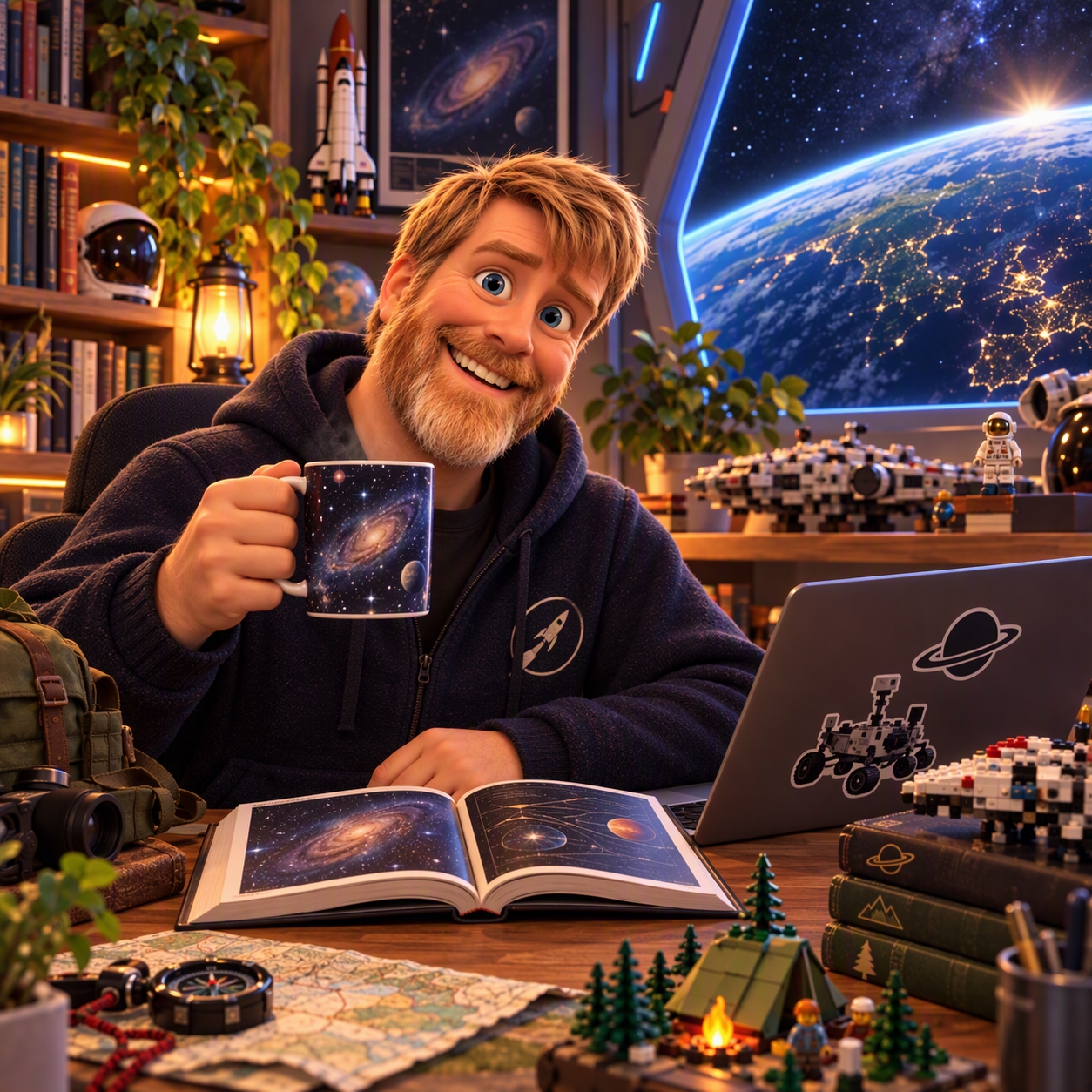
About David
Originally from Northamptonshire and now living in Cumbria, I'm an engineer, husband, dad and, apparently, possibly an author in the making.
I don't naturally think of myself as particularly creative, and calling myself an "author" still feels rather ambitious when I haven't actually written a book yet. But my adoring wife keeps telling me I should give it a go because I might surprise myself and, really, who am I to say no to her?
The truth is, I'd love to write a book. I just don't really know how to write one yet.
I've spent much of my life enjoying other people's imagined futures through science fiction, particularly the sort of big, chunky books that venture into space, explore humanity's future and build enormous worlds behind their stories. I've always been fascinated by history, technology, politics and how complicated systems fit together, so perhaps it was inevitable that sooner or later I'd start wondering what a future of my own might look like.
I don't have any particular expectations about where this will lead. Maybe one day there'll be a finished novel. Maybe there'll be several. Or perhaps I'll simply have spent a lot of time creating an extraordinarily detailed fictional future.
For now, I'm just going to see where it takes me.
Building the Second Age of Man
At the moment, I'm doing considerably more world-building than novel-writing.
I'm mapping out an extensive future history spanning more than a century, looking at how world events might unfold and how geopolitics, wars and conflicts, financial instability, resources, technology and changes within society could influence one another.
A lot of it may never appear explicitly in a finished book. In fact, readers might never know most of it exists.
I'll know it exists.
That's important to me. If something happens in this fictional future, I want there to be a reason it happened. I want the events surrounding it to make sense and the history behind the story to feel coherent, even when much of that history remains somewhere in my notes.
Perhaps that's the engineer in me.
I write technical and engineering papers as part of my work, where detail matters. Processes, procedures and requirements have to connect properly, and gaps have a habit of becoming problems later. I'm discovering that I've naturally started approaching world-building in much the same way.
Whether that's how you're supposed to write fiction, I have absolutely no idea.
But it's how I'm doing it.
History, Humanity & the Future
One of the things I find most interesting about imagining the future is that you can't really do it without looking at the past.
I'm interested in history, politics, conflict, technology, computing, electronic communications and space, particularly how developments in one area can affect everything around them.
That's becoming a big part of the background to the Second Age of Man.
There's also something fascinating about writing a fictional future while actually living through the beginning of it. I'm creating timelines for events that haven't happened yet, but the real world will continue moving forward alongside them.
It would be rather strange, and admittedly quite interesting, if in twenty or thirty years I looked back at some forgotten piece of my fictional timeline and discovered that part of the undercurrent had actually come true!
Hopefully not the particularly unpleasant bits.
Bringing People Into the World
Creating a hundred years of geopolitical history might be complicated, but I've discovered something potentially even harder:
What do you call everybody?
It turns out that picking a character's name can be surprisingly difficult.
These aren't just names I need to put on a page. If I'm going to create these people, I want to do them justice. I want to understand who they are, what shaped them and how they fit into the world around them.
Most importantly, if somebody eventually reads what I write, I'd like these characters to feel like people rather than pieces I've moved around to make the larger story work.
That's a very different sort of challenge from the technical writing I'm accustomed to.
Then again, perhaps learning how to do that is the point.
Exploring the Real World
I'm not always trying to work out what humanity might be doing a century from now.
The thing I enjoy most is spending time with my family, particularly holidays and exploring new places together. For me, a holiday doesn't begin when we arrive at our destination. It starts as soon as we close the front door behind us. The journey is part of the adventure.
I love theme parks, with Efteling being a particular favourite, but I'm equally happy getting away from everything and spending time outdoors.
I enjoy camping, backwoods cooking, sitting around a campfire, whittling and stargazing. I'm also a scuba diver and enjoy snorkelling and exploring beneath the water, especially underwater wrecks and the history surrounding them.
Then there are the quieter pleasures in life.
Like a nice tub of ice cream.
Unfortunately, if I'm distracted while eating one, there's a very real possibility I'll look down a short while later and discover I've accidentally eaten the entire thing.
These things happen.
Baby Steps
This is all still unfamiliar territory for me.
Gail and Eli are developing very different kinds of stories, so although we're all doing this together through Smallman Publishing, I can't necessarily look at what they're writing and use the same approach for my own ideas.
Science fiction, particularly at the scale I'm imagining it, presents its own challenges.
For now, I'm taking baby steps in a world that still feels rather unknown to me as a beginner "author".
I've spent most of my professional life writing things that need to be technically correct, detailed and unambiguous. Fiction asks something rather different of me. I need to learn how to take all that research, structure and detail and turn it into something another person might actually want to sit down and read.
I don't know whether I'll succeed.
I don't know exactly what the Second Age of Man will eventually become.
And I don't particularly mind.
I'm going to endeavour to enjoy finding out.
A story taking shape
I'm currently world-building and exploring how the Second Age of Man might develop across a much larger story.
At the moment, I have seven potential books mapped across its timeline:
The titles and cover artwork shown here are placeholders and are likely to change as the series develops.
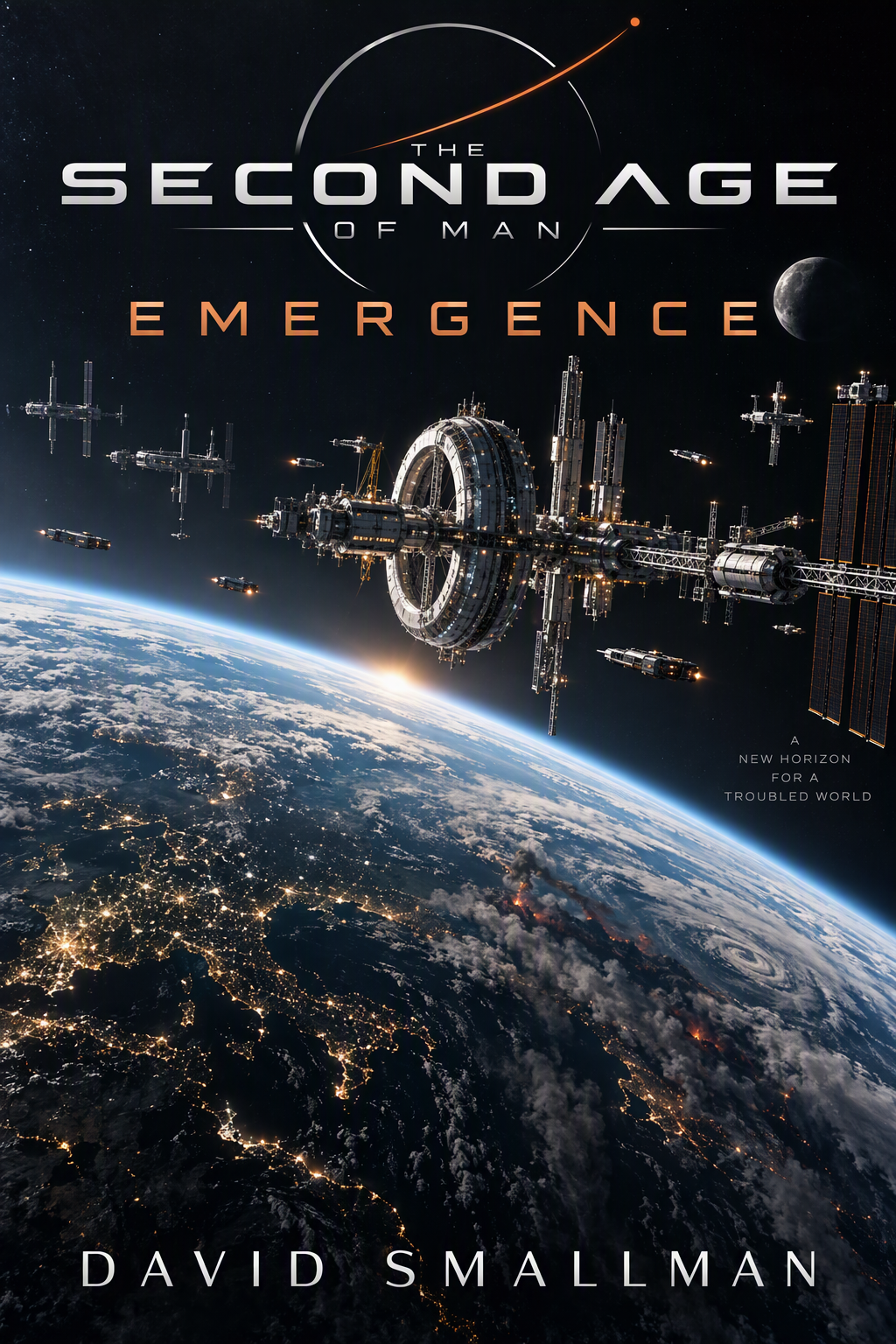 01Emergence
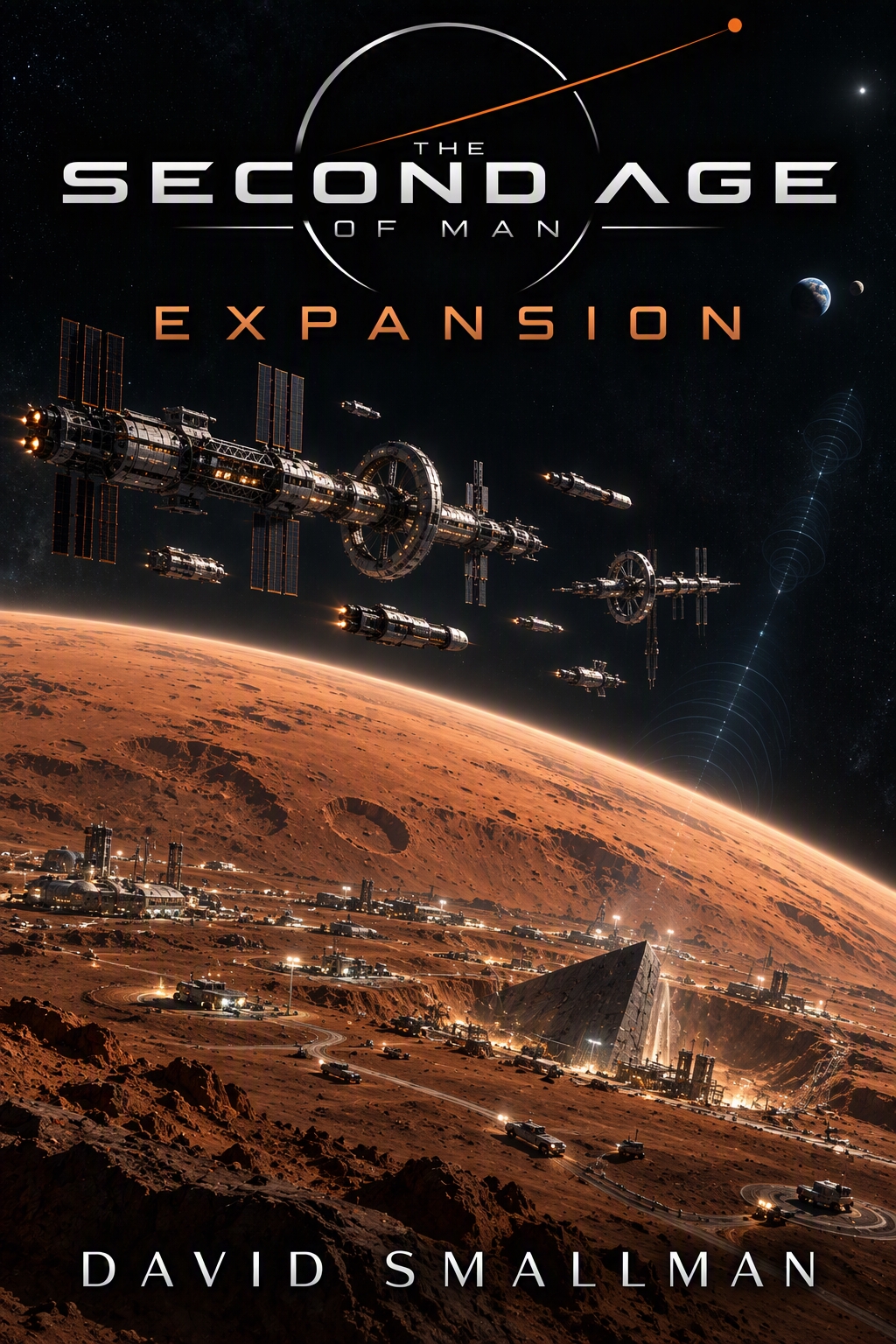 02Expansion
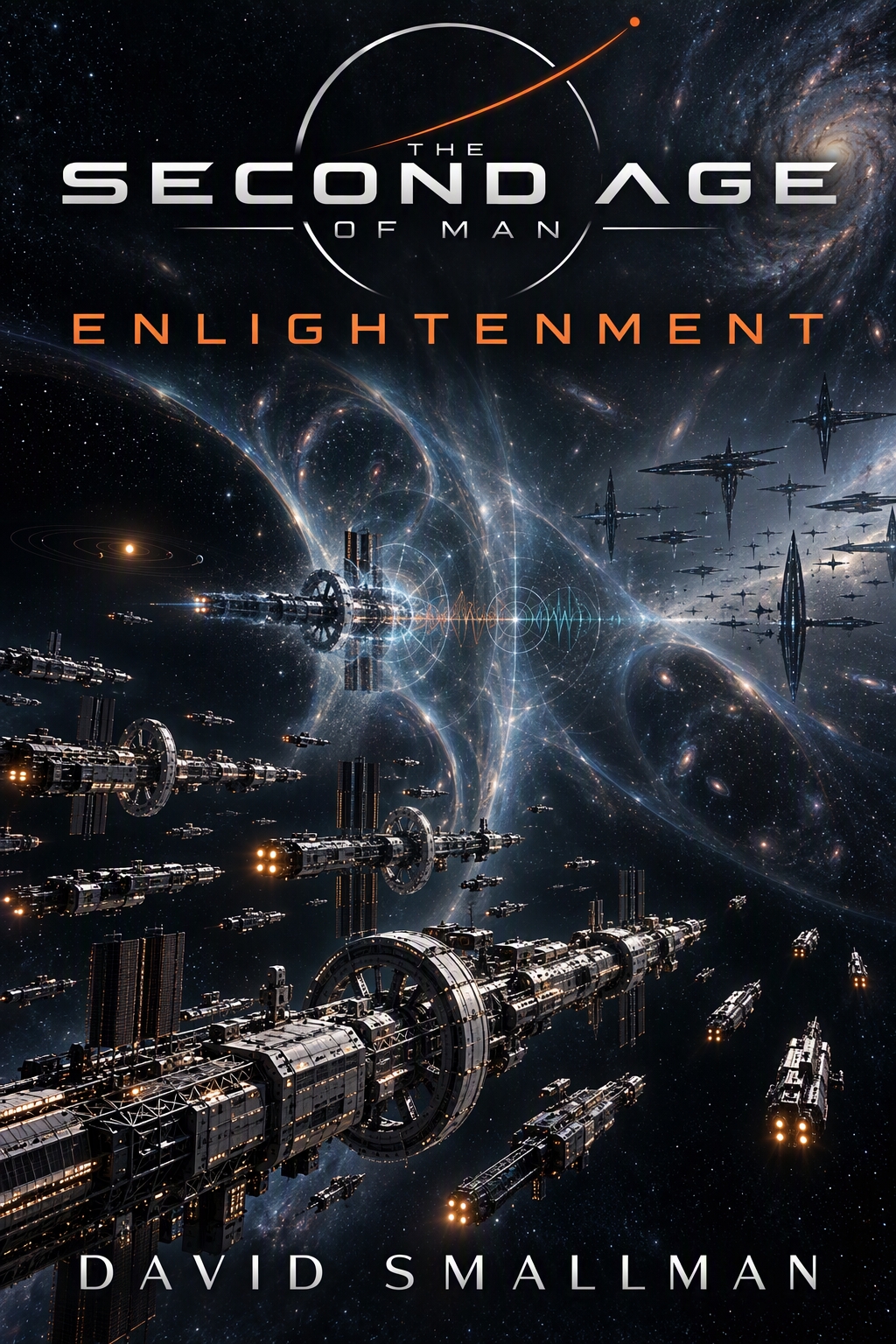 03Enlightenment
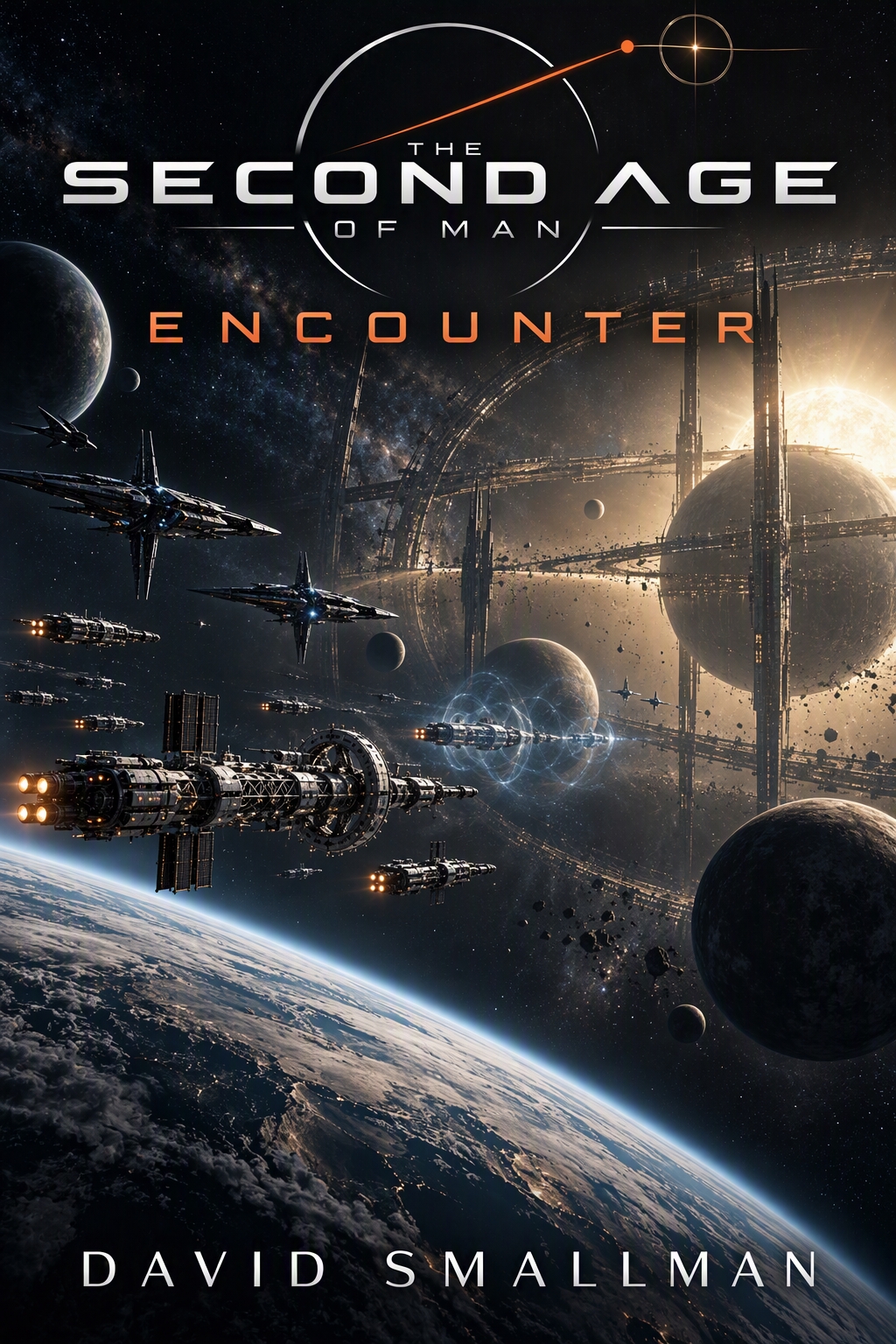 04Encounter
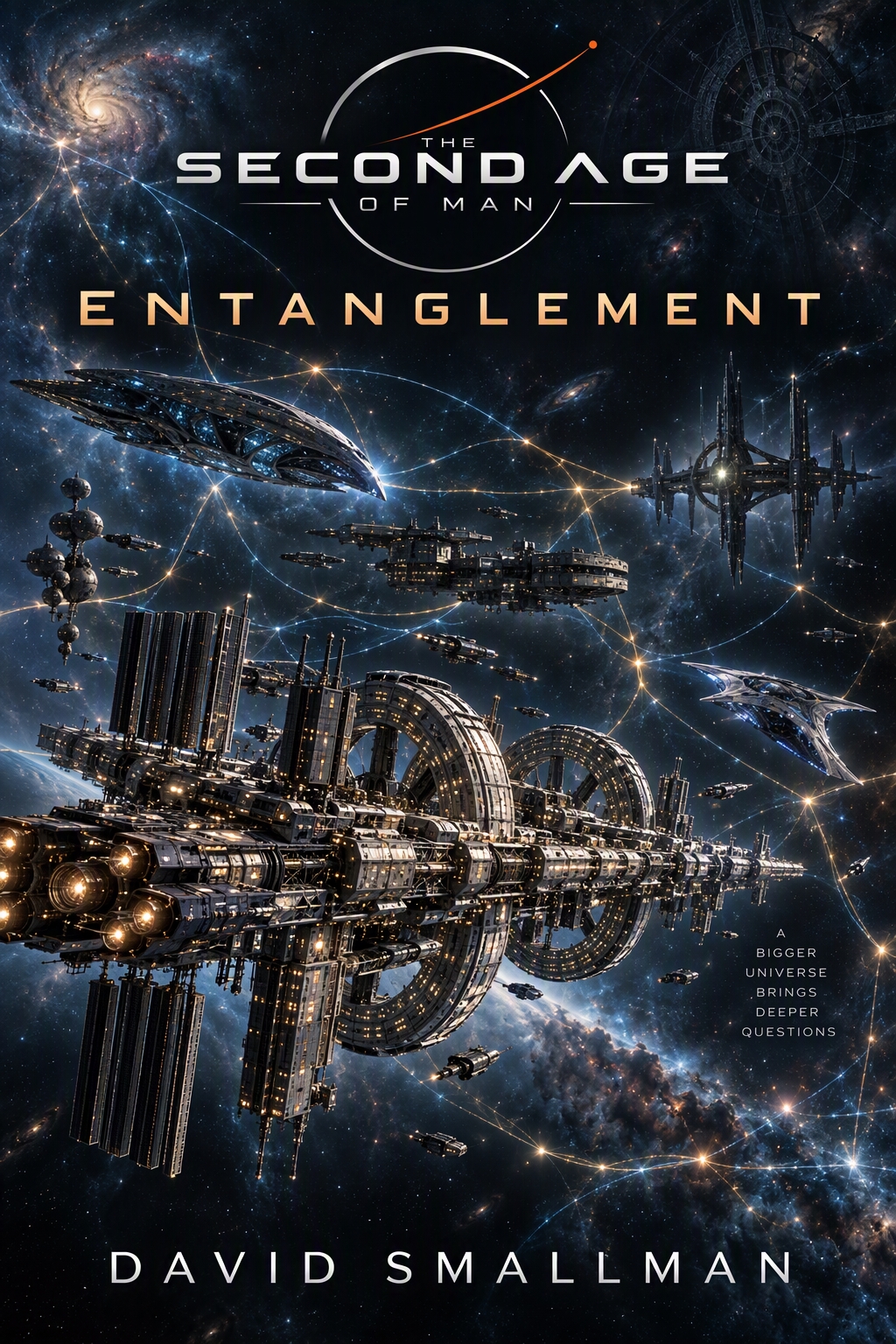 05Entanglement
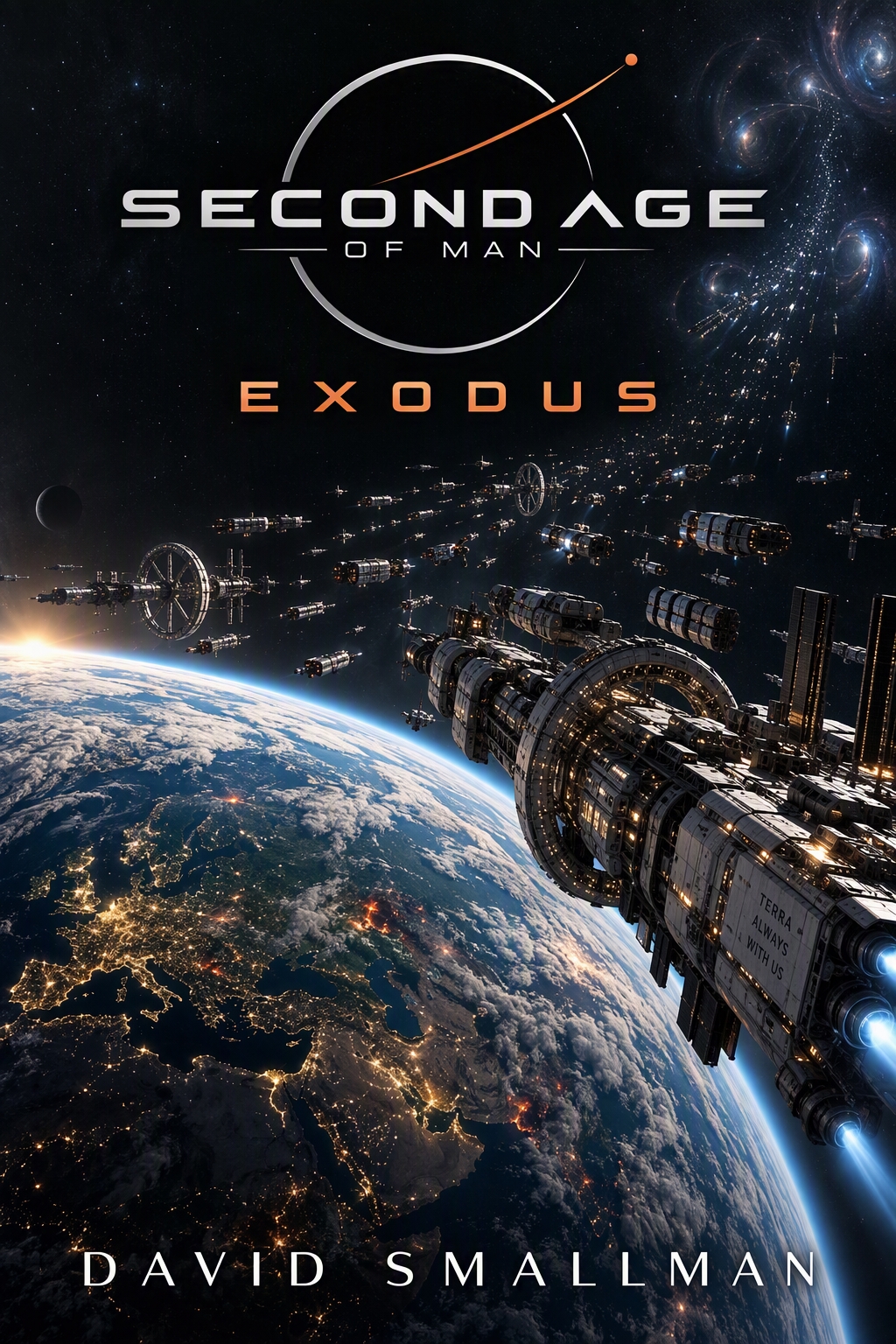 06Exodus
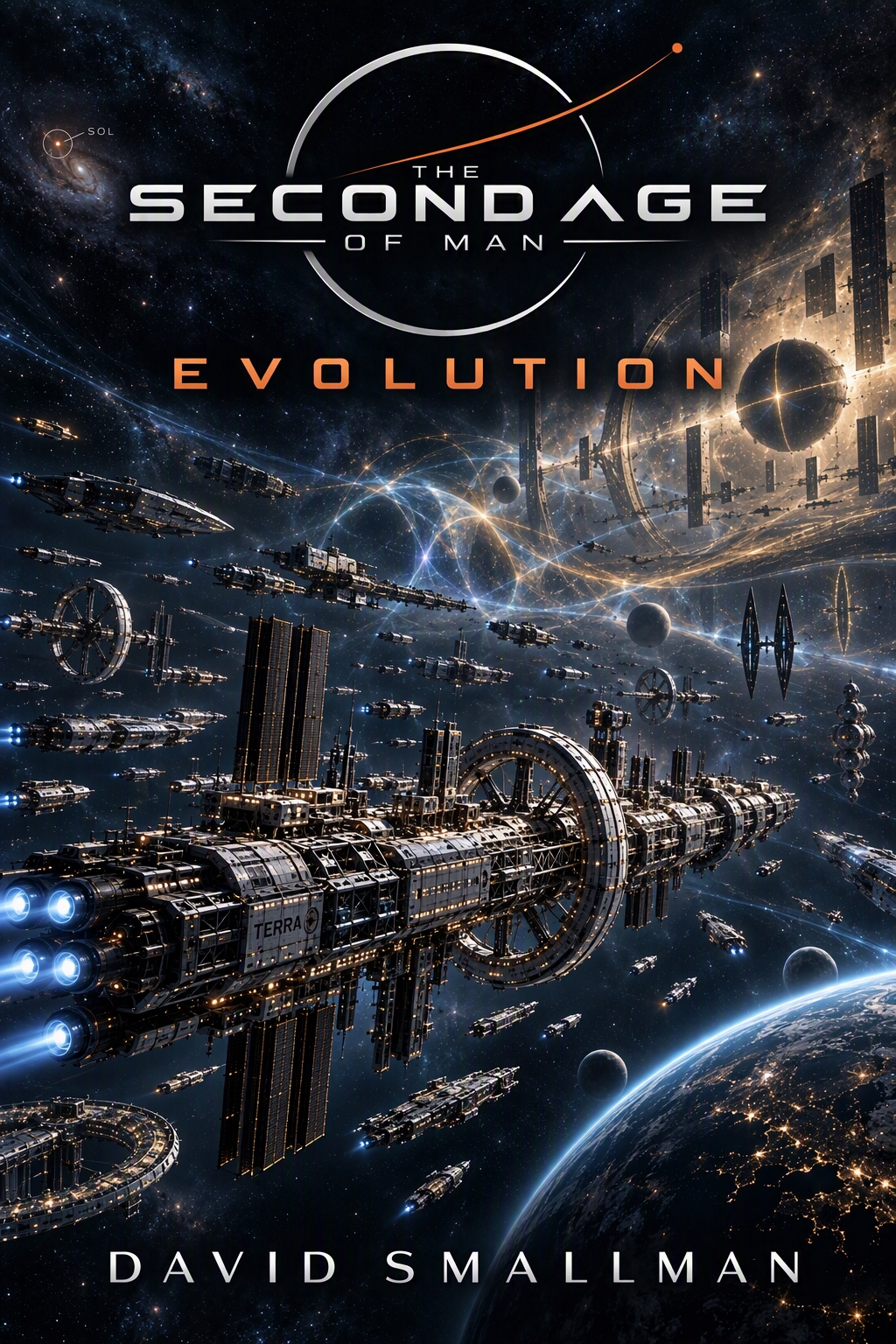 07Evolution
Right now, they're ideas, working titles and directions rather than promises about what the finished series will eventually become.
The titles, stories and even the cover concepts may change considerably as I continue developing the world.
And before I worry too much about Book 7... (which is the evolutionary timeline and a lot of cool E titles according to Gail...)
I should probably work out how to write Book 1.
Questions, ideas or just curious?
Have a question about the Second Age of Man or an idea to share? Get in touch with Smallman Publishing.